


A GREEK LEGEND: FREDDO ESPRESSO
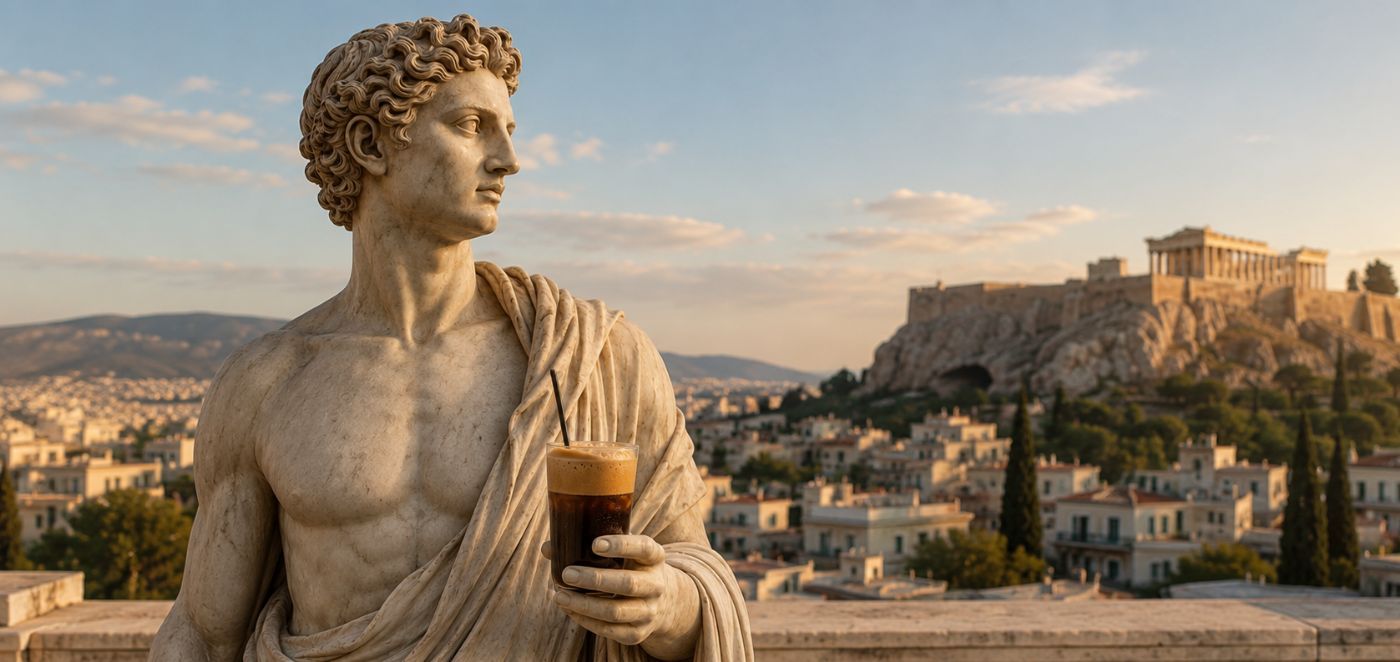
If you've been to Greece, you'll have noticed that everyone seems to have a cold coffee in hand. But that cold coffee isn't the iced americano or cold brew we're used to — it's something distinctly local: freddo espresso!
In Greece, the famous coffee chains you'd expect to see everywhere else in the world are surprisingly rare, while local cafés are everywhere. Interestingly, the number of people going to cafés is known to have increased even during the peak of the economic crisis. This phenomenon has actually become significant enough to be studied academically, referred to as the "café economy." Even during economic downturn, the number of cafés opening kept growing, with owners — often running the business with family members or in a space of their own — treating it as a form of investment and employment. For consumers, drinking coffee and socializing matters a great deal, a tradition that traces back to the 15th century. Most of the neighbouring countries are actually quite familiar with this tradition, known in Greece as "kafeneio". These are the places people go to talk politics, socialize, or play games (like tavli, or card games). This is also why coffee is meant to be a companion to that experience — meant to be taken slowly (siga siga). But coming back to today, especially for the younger generation, cafés have become a "space of freedom and socializing" where you can pay a few euros for a coffee and sit for hours. Rising unemployment and economic uncertainty only reinforce this. Because so-called "home-bound youth" — unemployed young people still living with their families — want somewhere to go outside the house. This may well be the answer to a question that older generations often direct at the youth, criticizing and misunderstanding it: "if there's an economic crisis, why are the cafés full?"
So in a country this devoted to coffee — even cold coffee — how did the big coffee chains fail to break into the market? Let's take a closer look at why freddo espresso is loved so much in Greece, and what sets it apart from other coffees, through something of an engineering lens.
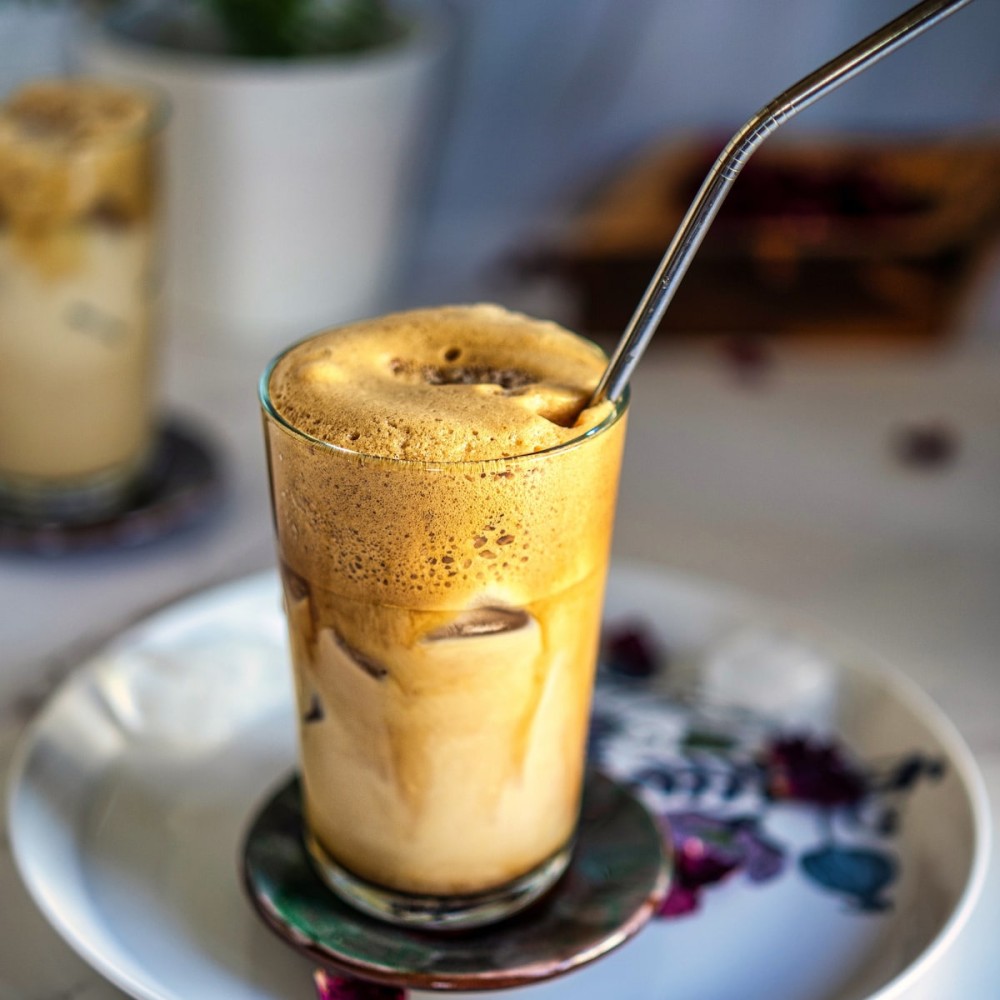
First, it's worth noting that freddo espresso's popularity in Greece goes back to the 1990s. Before that, people drank frappé, another foamy cold coffee. Frappé is made by shaking soluble (instant) coffee together with sugar and water. At the time, instant coffee was widely consumed in Greece, as it was everywhere else in the world. But also as everywhere else, instant coffee eventually came to be seen as lower quality compared to ground coffee, and the spread of second-wave coffee chains pushed people toward espresso, filter coffee, and americano. The problem was that espresso is quite intense, hot, and meant to be drunk quickly — not suited to the cold, slow-sipping style Greeks favored, and it lacked the thick foam layer people had grown to love. So espresso had to be reinvented in another form; people started looking for a foamy, cold alternative.
Let's go a bit deeper here, because foam is an important detail. There are a few reasons foam forms in coffee, and freshness is one of the key factors. Freshly roasted coffee beans still contain carbon dioxide gas, which gradually diminishes over time. That's why freshly ground coffee produces more foam when brewed or mixed. A classic espresso machine forces pressurized hot water through ground coffee. This pressure and heat release dissolved carbon dioxide, which is what produces the foamy coffee. But in making freddo espresso, the espresso itself is just the starting point — the mixing and the ice matter just as much. After the espresso is pulled, it's mixed vigorously with a generous amount of ice. The ice doesn't fully melt, but the coffee cools rapidly. This fast mixing step is also what boosts foam formation.
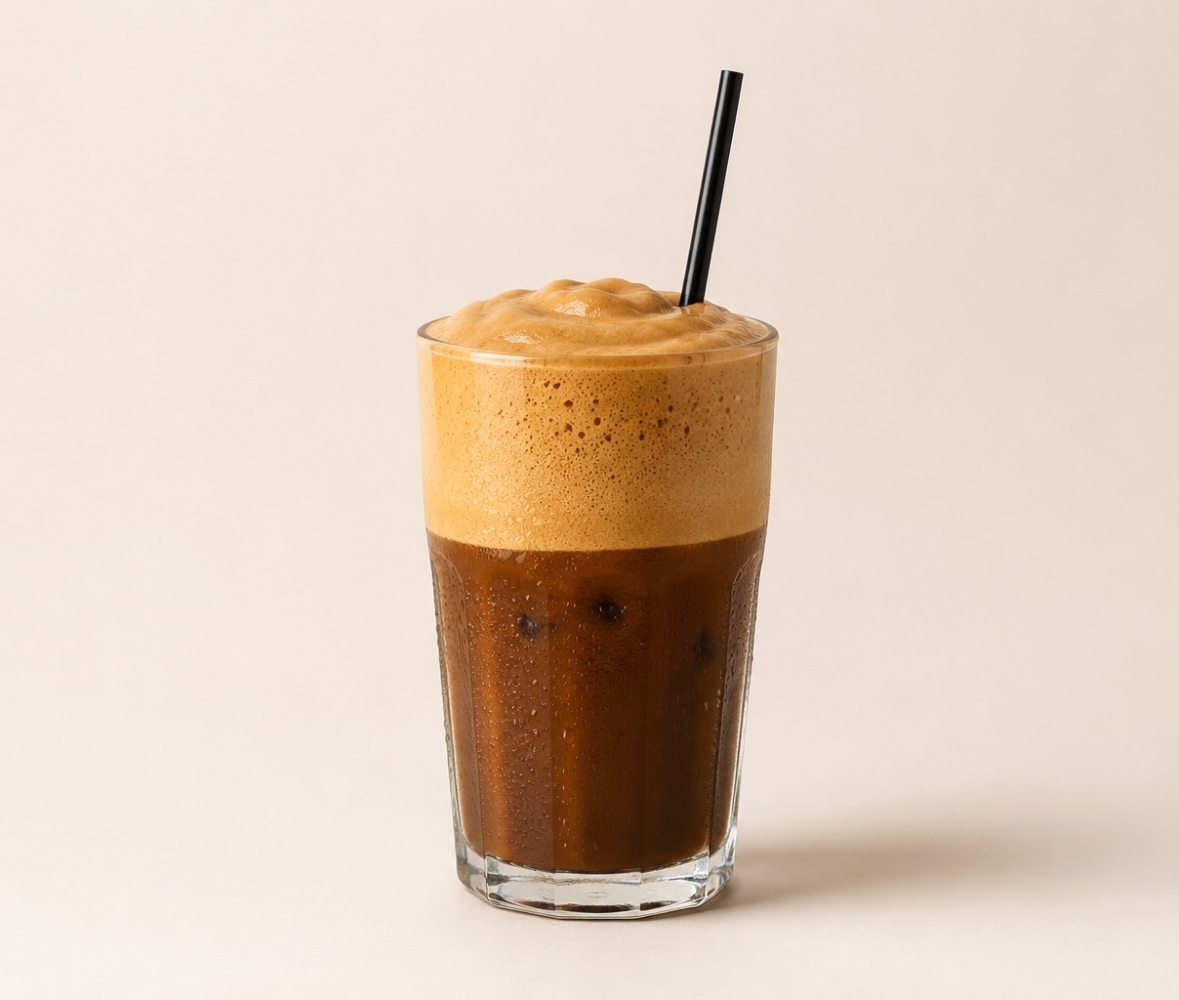
Now, we'd normally assume that this foam — really just a mass of tiny gas bubbles — should merge into larger bubbles and eventually collapse. And yet, even after you finish a freddo espresso, foam is still sitting there in the glass. How does that happen?
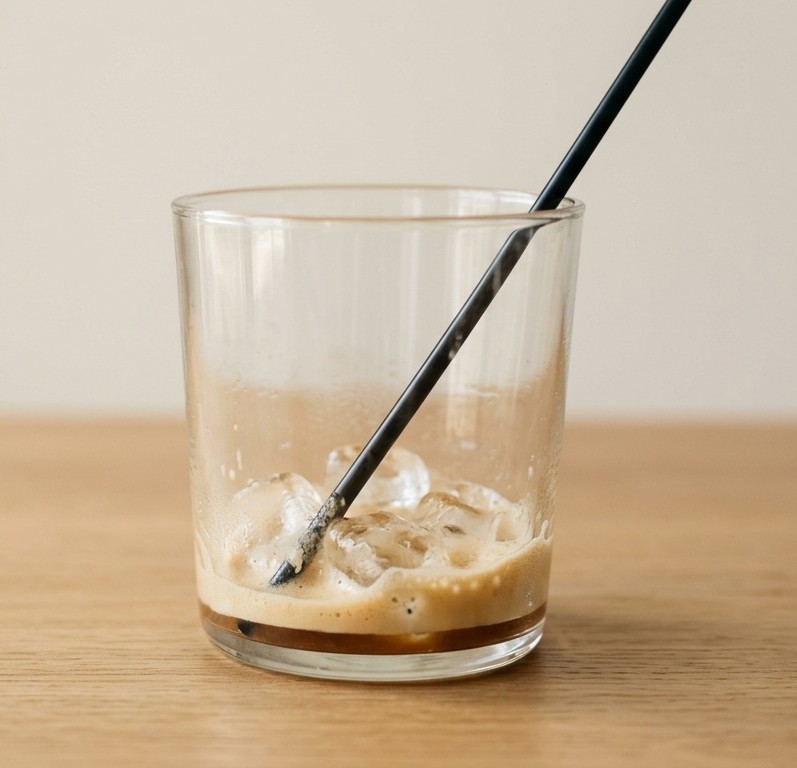
During roasting, the Maillard reaction produces polymers called melanoidins. These are the compounds responsible for making the foam thicker, and darker roasts tend to produce richer foam as a result. This is why baristas say "you can't make a good freddo espresso with stale coffee or a weak grind." Alongside this, soluble proteins and peptides help form a bond at the air-water interface, creating a kind of membrane. Fine particles dispersed during grinding also cling to the bubbles that form, creating a mechanical barrier. Together, these keep the tiny air bubbles from merging while also forming a stable layer on the surface.
Freddo espresso isn't just Greece's most-consumed drink in summer — it holds that position in winter too. It's a product that has adapted remarkably well to the slow, conversational coffee "ritual" Greeks are accustomed to. Drinking it through a straw is particularly interesting too, since it keeps the foam or ice from getting in the way as you drink. The straw used is different from the ones you'd find at other coffee chains. For freddo espresso, a thin straw of around 2mm is used, which actually makes for slower sipping. Sometimes the quality of a good freddo espresso is even judged by whether the straw can stand upright in it. In other words, the thickness and stability of the foam has become a quality benchmark in its own right.
In the end, this relatively young drink has adapted itself to Greece's most vibrant sector — the HORECA channel — and, through its preparation, quality standards, and the way it's consumed, seems to have become a national drink in its own right. The fact that it's especially the younger generation embracing this drink, alongside the difficulty global coffee chains have had gaining ground in Greece, makes for an interesting lesson in marketing. Greece's own sociological, economic, psychological, and gastronomic relationship with coffee appears to have played a significant role in shaping this entire process.