


WHAT DOES BEHAVIORAL ECONOMICS HAVE TO DO WITH EATING DISORDERS?
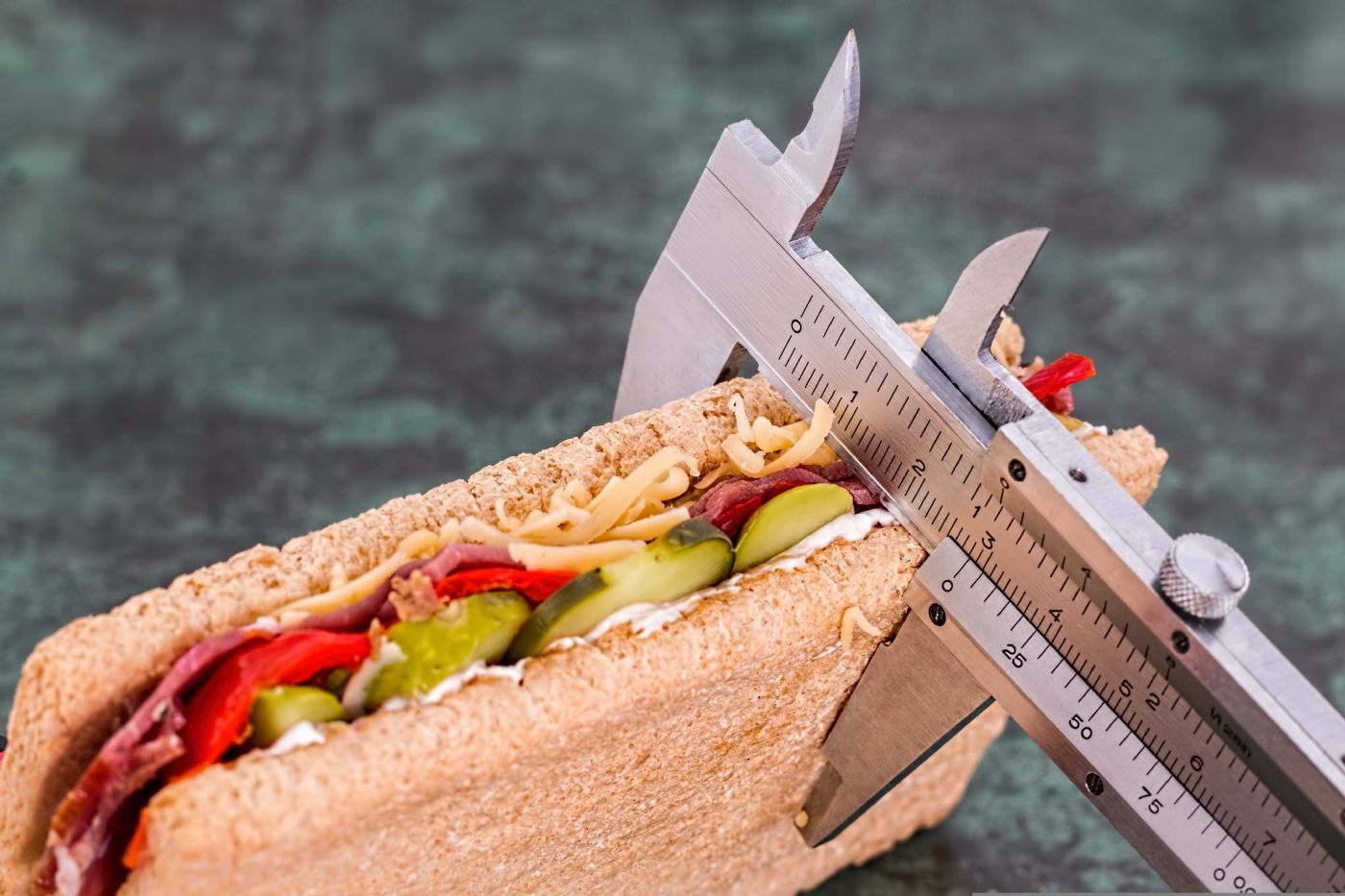
In my first years studying food engineering, I became increasingly curious about what went into processed foods. Not just the ingredients, but how healthy — and how clean — they actually were. Because eating processed food was simply part of urban life. Especially as a student, we were almost forced to eat at least one meal out each day. At worst, sitting somewhere and eating together was a form of socializing. But we didn't think much about whether it was healthy. That is, until one of our lab courses had us test the microbial load of food from our favorite restaurants and cafés...
There was a çiğ köfte place I loved in Ankara. It was famous, and since çiğ köfte is loaded with hot spices, I brought a sample to class without a second thought. The results, though, were far from reassuring — and worse, no one's sample came back clean. Meanwhile, the health effects of packaged food were, as always, a subject of debate. The rule of thumb was: the less packaged food, the "healthier" the diet.

Given my field, I was already drawn to researching the topic. But over time, I started paying an excessive amount of attention to what I ate. That attention became so controlling that I found myself over-planning everything — deciding in advance which café to go to, calibrating my behavior around how hungry I was, obsessing over details that shouldn't have mattered this much. It got to the point where it crossed into an eating disorder. I couldn't control everything, and my ideal of being "healthy" kept collapsing. Whenever I "cheated" with foods I'd banned myself from, I felt guilty, and the next day I'd punish myself for it. Thankfully, I recognized the pattern before it went further, and started researching it seriously.
Of course, understanding any issue means understanding its context. One of the most striking statistics I came across while researching eating disorders was this: the people most affected are young women — and among them, disproportionately, women who use social media heavily. Studies showed that constant commentary on young women's bodies, the expectation that once they become mothers they'll instinctively know how to choose the "best" food for their children, the idealization of thinness through media, and the praise heaped on public figures held up as beautiful for being thin, all fuel an obsessive need for bodily control. And it doesn't stop there — women are also expected to stay healthy and look young well into later life, and those who "fail" are seen as weak-willed or unsuccessful. The weight-loss industry alone has grown into a massive economy built on this expectation.

People with eating disorders are often dissatisfied with their bodies, prone to constant self-monitoring and self-punishment, and their relationship with food becomes distorted enough to override the body's natural signals or interfere with everyday functioning. But eating disorders are too broad a category to be reduced to a fixation on thinness or health. Concepts like emotional eating and hedonic eating fall under the same umbrella — shaped by a mix of hormonal, psychological, and environmental factors. Eating to reward yourself, or simply to feel good, isn't inherently a problem. The real problem is when food becomes the go-to source of pleasure used to compensate for some other void in life — because high-calorie food is known to activate the brain's reward system, much like the reward triggered by winning money while gambling. A person with a gambling addiction, after losing money, often keeps playing — taking on more risk to try to recover the loss. That pattern closely mirrors someone who restricts themselves rigidly and can't tolerate small lapses: once the diet slips even slightly, they think "well, it's already ruined" and overeat well past the point of fullness. What starts as loss of control and what gets labeled as "guilt" become locked in a vicious cycle, each one demanding the other.

The core of it is this: these cycles reflect psychological patterns that are simply part of being human. Research in behavioral economics confirms it — people weigh losses more heavily than equivalent gains, and they're impatient. Losses, in fact, register in the brain almost like physical pain. As in the "losing gambler" narrative, refusing to accept a sunk cost — and trying to numb that pain — can push someone to repeat a behavior they know they shouldn't. On top of that, the pain of loss puts the body into a stressed, out-of-control state, and in that state, people can't make rational decisions. This isn't unique to addiction — the body makes worse choices under any kind of stress, whether it's hunger or sleep deprivation. These aren't just anecdotes; they're findings backed by experimental research, and viewed sociologically, they shape people's decisions and risk-taking behavior — and by extension, entire economies.
All of this pushed me to look at eating disorders through a much wider lens. For my master's thesis, I researched the effect of social media food advertising on eating disorders. Because these psychological cycles aren't random flaws that occur spontaneously in an individual's mind — they're well understood. In fact, marketing can build entire strategies around them, tailoring campaigns to specifically target the audiences most susceptible to them. That's not necessarily because marketers or algorithms are acting with bad intent — but these behavioral patterns have been identified, and they are being used. A few examples:

Algorithms are more likely to show high-calorie food ads at times when users are more likely to be hungry or exhausted — late at night, right after work. These moments coincide precisely with peak decision fatigue and the weakest point of self-control. Similarly, because high-calorie foods are strongly associated with happiness and activate the brain's reward center, people going through an emotionally difficult period are more likely to develop disordered eating patterns. In practical terms: if you're exhausted and hungry while browsing a grocery app or standing in a store, you're less likely to make a good choice. Or if you're very hungry, you might buy more food than you'll actually eat. It doesn't stop there — leaving food on your plate can feel like throwing money away, pushing you to force yourself to finish it. And on the flip side, food deals offering bigger portions for a better price-per-value can be hard to resist.
So when these behavioral patterns eventually contribute to weight gain, are you really the only one to blame for not making the "healthy" choice?
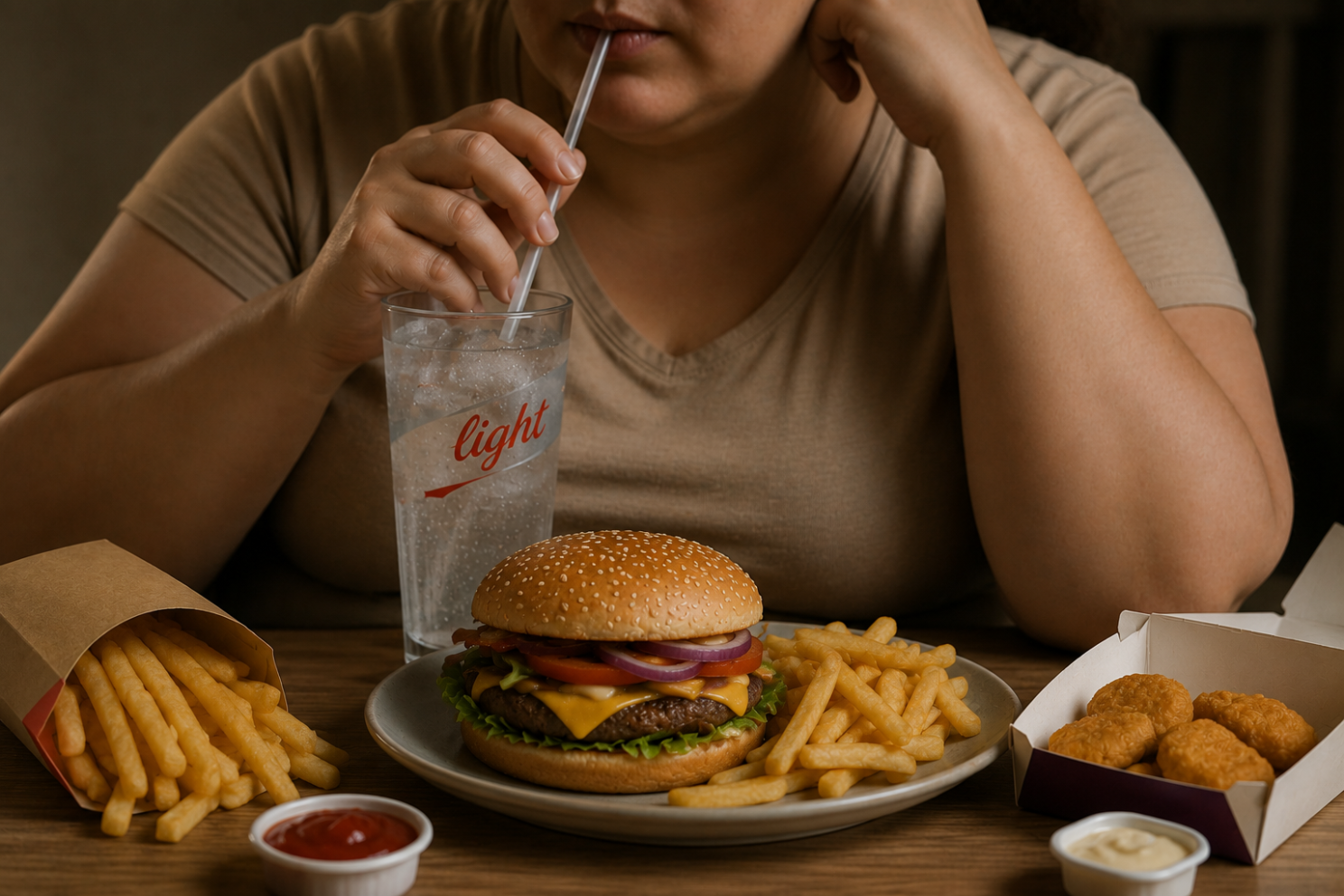
Another example: "clean eating" or "guilt-free" messaging. These messages constantly remind you of the boundaries of a strict diet or healthy lifestyle, treating any small slip as a 'sin' and in doing so, they can turn into a kind of triggering marketing. People turn to these products specifically to avoid feeling "guilty." But is the product actually as healthy as it claims to be? Do the people designing these marketing strategies stop to consider that linking food with guilt or triggering the "well, the diet's already ruined" feeling once someone crosses a line, might lead to overeating or excessive restriction? It doesn't seem like it. But if that thought is already sitting in your head, they'll offer you an "innocent" snack that promises to erase it, delivering an "eating experience" designed to make you feel better and they've already calculated, statistically, that if you have that particular anxiety, you'll buy it.
What I came to understand most clearly during my thesis research was this: individual awareness is necessary, but not sufficient on its own. Speaking for myself, I can bring a feminist lens into my own life, make peace with my body, question what the system demands of me, and work to repair my relationship with food. But we're up against a system optimized at a massive scale specifically to target these exact psychological vulnerabilities. Can we really fight that system with the same motivation, every single day? Or should we instead be asking how visible — and how accountable — the system driving these cycles actually is?
Today, that accountability falls largely on regulating marketing practices. But I believe those of us working in the food industry — and conscientious consumers as well — also carry some responsibility here. That's why I think this issue needs to be approached from multiple angles, examined critically, and shaped by regulation that serves everyone's interest. And doing that critique well means pointing to the right pressure points and being honest — with ourselves and others — about what consequences these patterns can produce. I believe it's only through that process that we can arrive at regulations that protect people's wellbeing, rather than exploit their vulnerabilities.