



Collagen is one of the fundamental building blocks of our bodies, binding tissues together and providing structural integrity. It accounts for one-third of the total protein in the human body, providing tensile strength particularly in the skin, cartilage, tendons, and connective tissues. In certain internal organs, it maintains structural integrity and shape, functioning almost like an internal skeleton. Our bodies naturally synthesize collagen through a healthy diet, regular sleep, and a low-stress routine. However, as we age—specifically starting from our mid-twenties—this synthesis begins to decline. Beyond aging, factors such as UV exposure, smoking, and sugar consumption also negatively impact collagen production. As collagen levels drop, we observe effects such as skin thinning and sagging, the inability of cartilage to adequately protect bones (leading to increased pain with movement), decreased bone density, and delayed muscle recovery.

How did collagen transition into a mainstream dietary supplement?
Collagen's partial entry into European cuisines began in the 15th century, when animal skins and bones were boiled to obtain gelatin. Gelatin is a denatured, partially degraded form of collagen produced via heat treatment, and it served as an affordable protein source. However, its limited amino acid profile led to a decline in interest over time, and for a long period, gelatin's use was relegated to acting as a thickening agent in confectionery.
In Asia, particularly in Korea and Japan, the story unfolded differently. Traditional diets already incorporated seafood, animal bones, and skins. The collagen content of these foods and its importance for joint and skin health were being actively studied. However, a major hurdle remained: when collagen is ingested, it is broken down into amino acids and does not remain intact. Scientific research sought a method to ensure this breakdown was controlled so that collagen peptide fractions could effectively reach target tissues. In the mid-to-late 20th century, enzymatic hydrolysis led to the development of water-soluble hydrolyzed collagen peptides. These peptide fragments were small enough to reach the intestines and be efficiently absorbed. In the early 1990s, Japan pioneered the formal definition of functional food. Under the label "Food for Specified Health Uses" (FOSHU), ingredients meeting specific scientific criteria began to be offered as dietary supplements. These developments gave birth to a new sector that attracted heavy investment from cosmetic and pharmaceutical companies.

While collagen research in the West remained limited through the early 2000s, beverages, candies, and supplements had already become commonplace in the Asian market. By the 2010s, with the rising popularity of high-protein diets, collagen began to grab global attention. Its entry into supermarket shelves accelerated with the popularization of ketogenic and paleo diets, and the natural collagen content of products like bone broth began to be highlighted on labels. The realization that collagen cannot be effectively absorbed through the skin shifted it away from cosmetics and into the world of dietary supplements—finding its way into smoothies, coffee, and sports nutrition. This rapidly growing "healthy and functional" nutrition sector began creating consumer-oriented products by integrating collagen into diverse formulations.
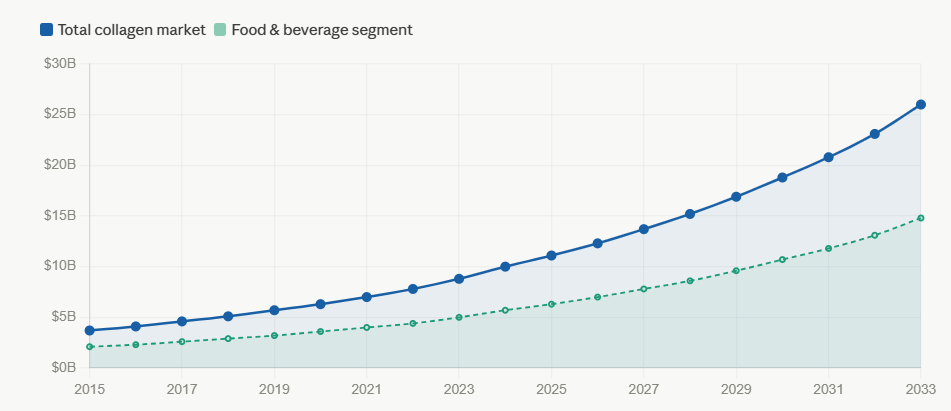
As research intensified, details regarding collagen types, synergistic nutrients that enhance absorption or synthesis, and the varying bioavailability across different sources became clearer. Consequently, manufacturers moved beyond bovine and porcine sources to include marine collagen, which is recognized for its higher bioavailability. As the market expanded, demand for vegan alternatives also grew. This led to the development of fermentation technology—using gene transfer into bacteria and yeast to produce biologically identical collagen peptides—though this method remains costly for now. As of 2024, the total collagen market is valued at approximately $10 billion, with projections suggesting it will reach $26 billion by 2033.
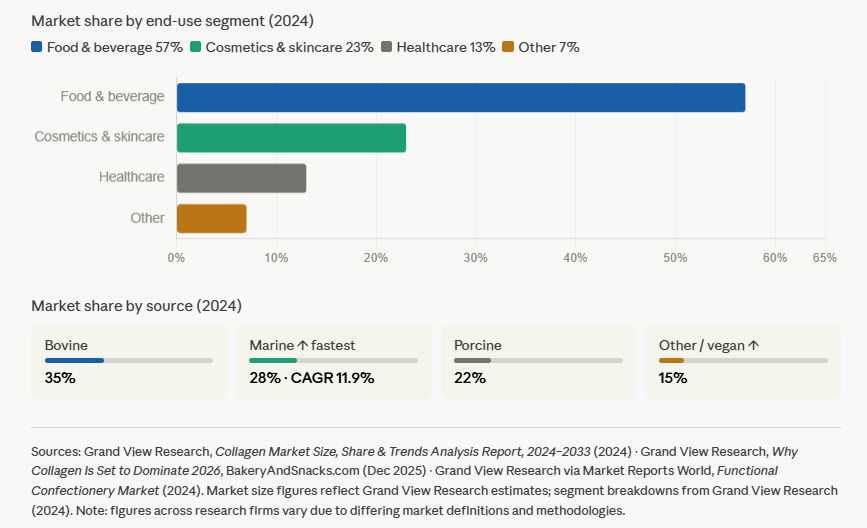
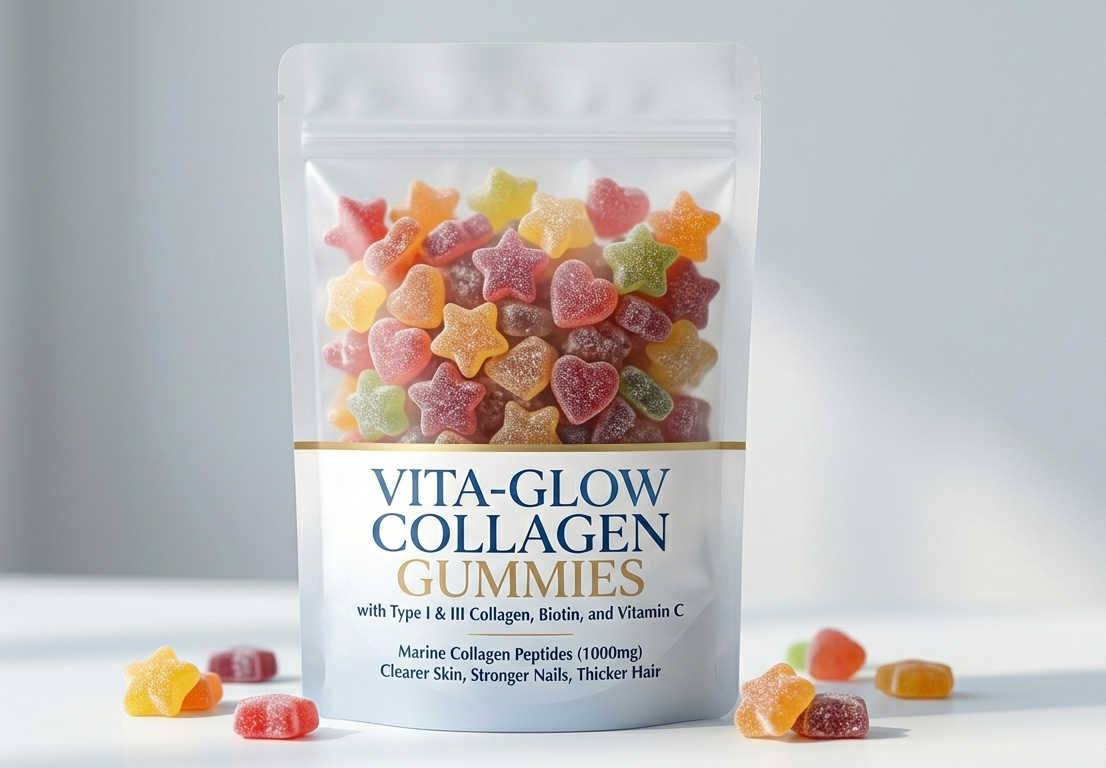 The primary target audience for collagen products is women aged 25–45. In 2024 alone, over 700 new collagen-infused products were launched, the majority in gummy form. Research shows that the mere presence of the phrase "contains collagen" significantly influences consumer purchasing decisions. However, the effectiveness of this delivery format remains a legitimate question. First, sugar consumption inhibits collagen synthesis, yet most gummies contain substantial amounts of sugar—a fundamental contradiction. Second, dosage and consistency are critical: clinical studies suggest that a daily intake of around 10 grams, sustained over approximately three months, is required to observe measurable effects. Gummies, however, typically contain only 2–5 grams of collagen per serving and fall squarely into the "indulgent" category rather than a disciplined supplement routine. In response, regulators in Europe and North America have introduced stricter labeling requirements to protect consumers; claims such as "rejuvenates skin" or "delays aging" are now prohibited without specific supporting scientific data.
As for the food industry's response, giants like Nestlé, Hershey, and Mars are all moving to capture this trend. Some are launching functional product lines under separate brand names or through partnerships, while others are acquiring established firms already operating in the space. Despite this, niche and independent brands continue to hold their ground. Bypassing traditional advertising, these brands tend to favor social media, relying on influencers and e-commerce to sustain sales momentum.
Do you have plans to produce collagen-based products? You can contact us for formulation support.