
CAN SLEEP QUALITY AND STRESS LOAD IMPROVE WITH PROBIOTICS : PSYCHOBIOTIC SUPPLEMENTS
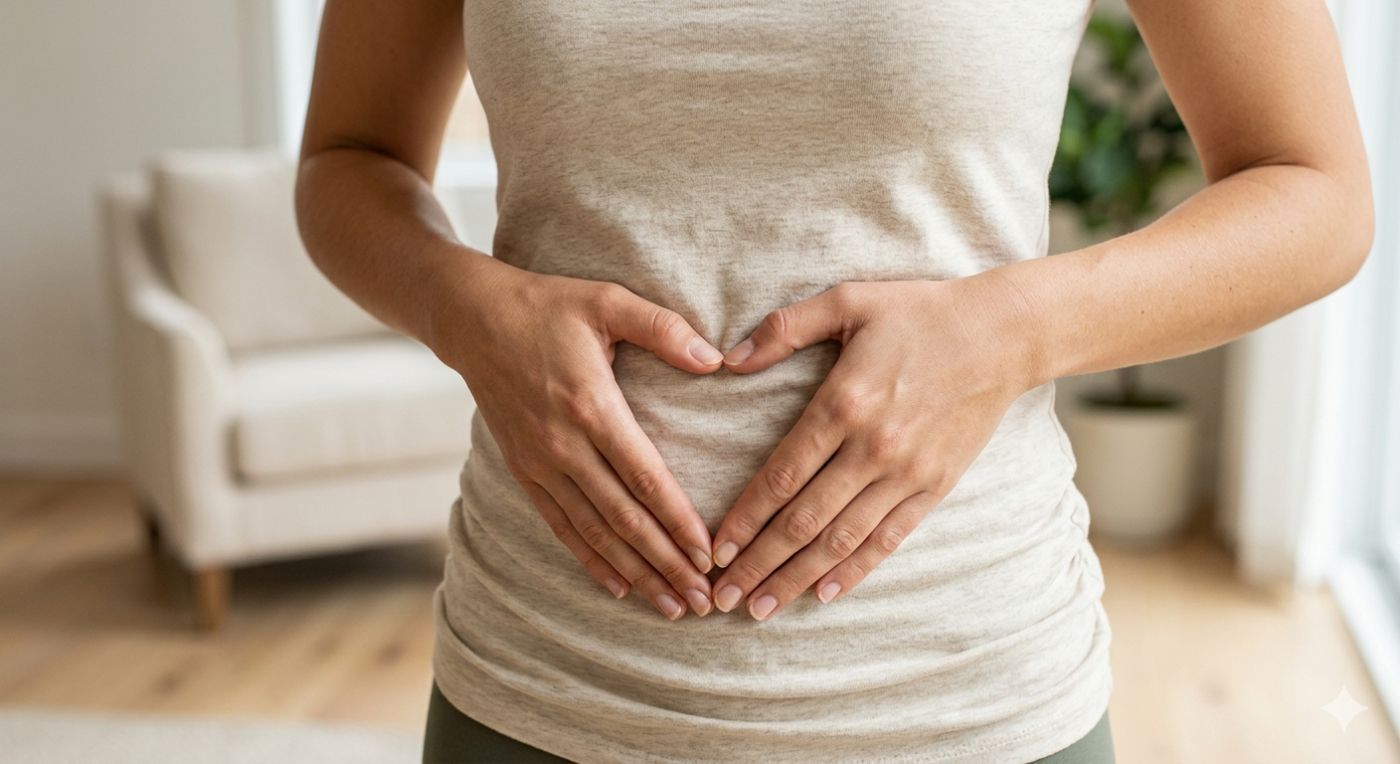
At the Vitafoods exhibition we attended in Barcelona last week, there was a particularly striking topic: the rising sleep issues and chronic stress among younger generations. Before discussing the products that have become the new focus of the dietary supplement industry, one question comes to mind: Why are younger generations so stressed?
It is known that older generations faced very challenging “physical” pains such as war, famine, and poverty, yet they were diagnosed less mentally despite these conditions. Especially in generations after the 2000s, we are talking about problems brought about by social acceptance, comparison, future uncertainty, constant exposure to information, urban life, and distancing from nature, for which solutions cannot be found in the short term.

Well, can our brain distinguish between different stress sources and give different responses? For example, can we get ahead of stress by thinking, "I have more opportunities than previous generations, so I should be happier"? Unfortunately, no. Research shows that our self-evaluation and our perception of scarcity are shaped by our reference point. That is, we feel poor, rich, or happy “compared to others”. In addition, our stress levels increase due to the negative news we are exposed to, air pollution, inactivity, and the multitude of stimuli. When the stress level increases and becomes chronic, we see an increase in related diseases. In the globalizing world and modern life, the impact of all these factors affecting stress has increased in a negative direction. Now, the events and people we compare ourselves to, or the subjects we evaluate ourselves on, are much more numerous. But that is a subject for another article; let’s get back to the food supplements focusing on the health of stressed generations. But first, let’s briefly look at what stress is.
Stress and Cortisol: The Survival Mechanisms
Stress and cortisol are two stimulants of our body, mechanisms that make us focus on our needs essential for survival and save energy. Stress is a state, an evaluation of our brain. Cortisol, on the other hand, is a hormone, a chemical that stimulates our body. When we are under threat, stress and cortisol allow us to move quickly and stay awake. They stop secondary tasks that consume energy, such as cell regeneration and growth.
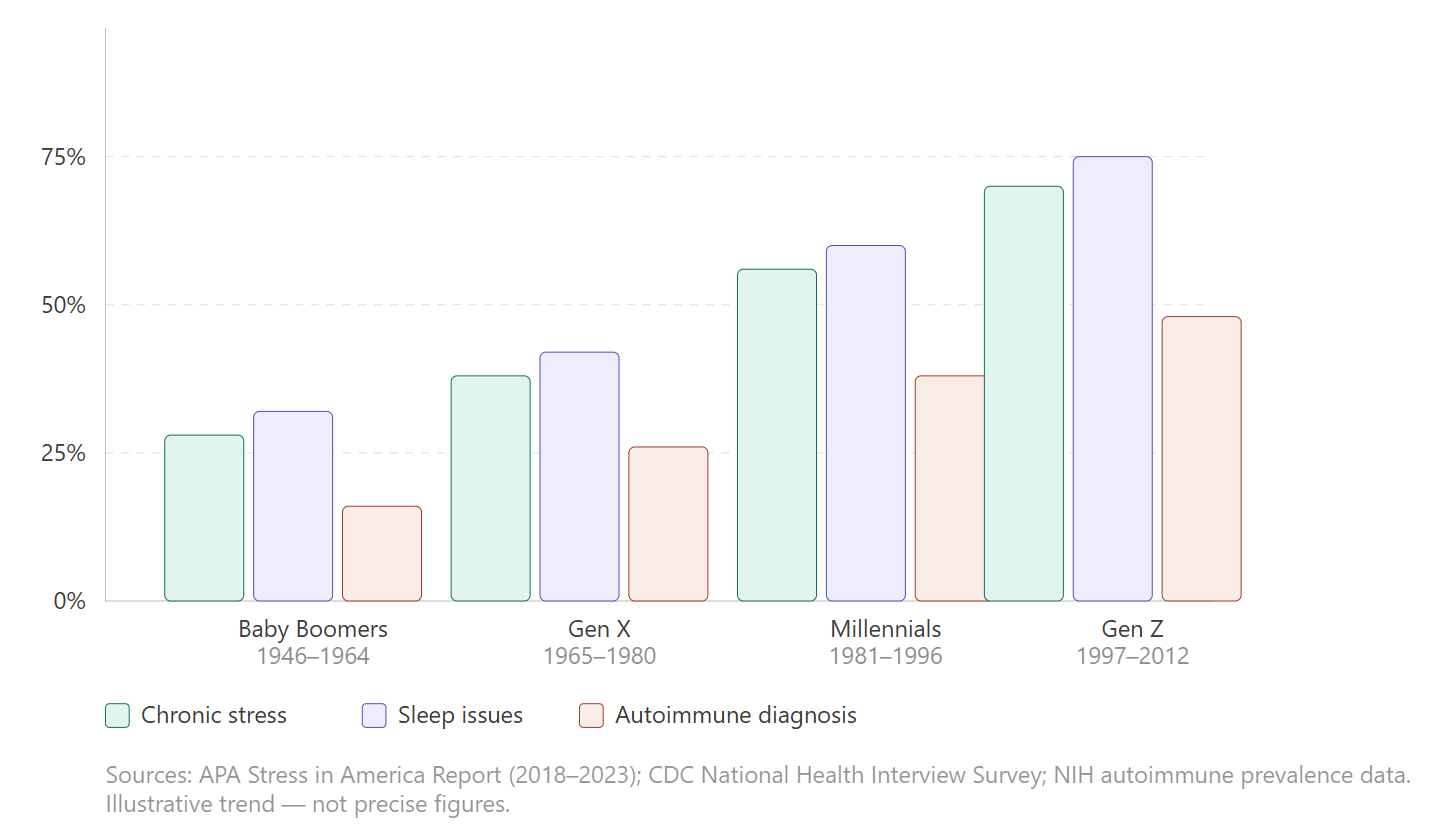
So, what happens when it stays high for a long time? For example, the intestinal wall thins and its permeability increases, while intestinal mucus decreases. This situation actually does not develop solely due to stress or cortisol. It is known that intestinal permeability also increases in people who exercise excessively or in advanced ages. Increased permeability and decreased mucus cause the body to be unable to renew itself, the accumulation of harmful components, and a decrease in nutrient absorption. This accumulation can lead to a series of disorders ranging from inflammation to the immune system attacking its own cells. On the other hand, research shows that stress-related autoimmune diseases, sleep issues, eating disorders, and other stress-related illnesses are diagnosed more than before, and the chronic stress problem affects Y and Z generations more.
The Second Brain: The Gut-Brain Axis
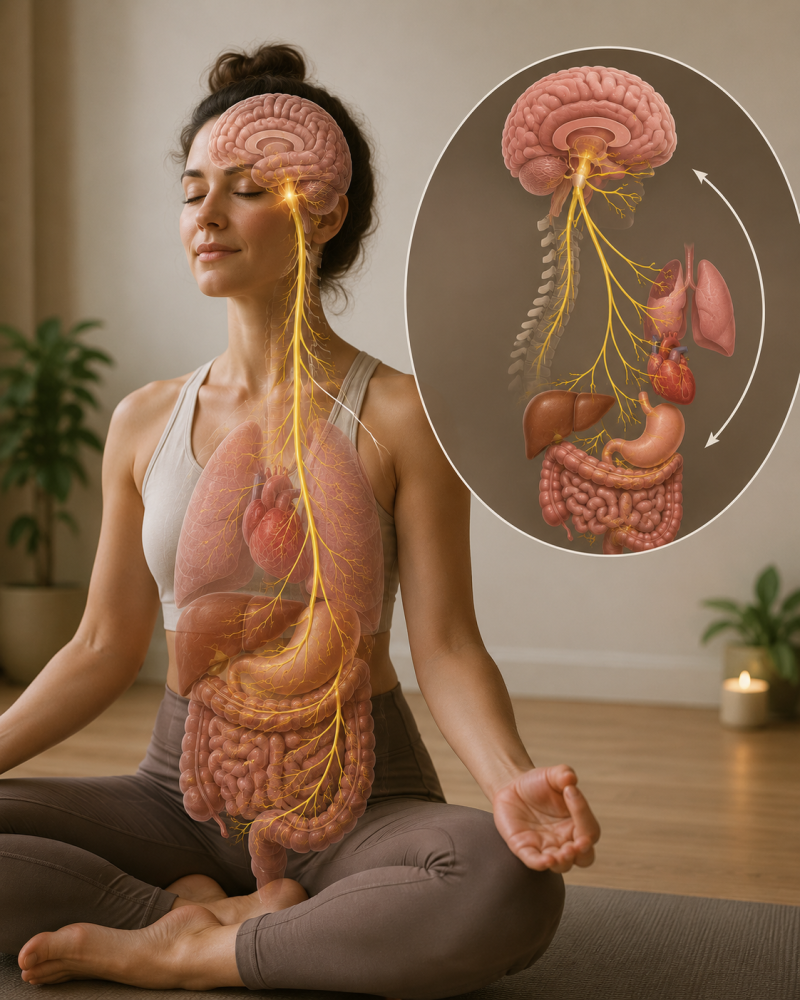
As studies on stress-related diseases increase, we understand the connection of the human mind with the body better. For example, we are discovering that digestive problems (such as irritable bowel syndrome) can be related to stress and can be treated not only by eating healthy and exercising but together with a healthy mind. This is where the information that the intestines are our second brain comes into play.
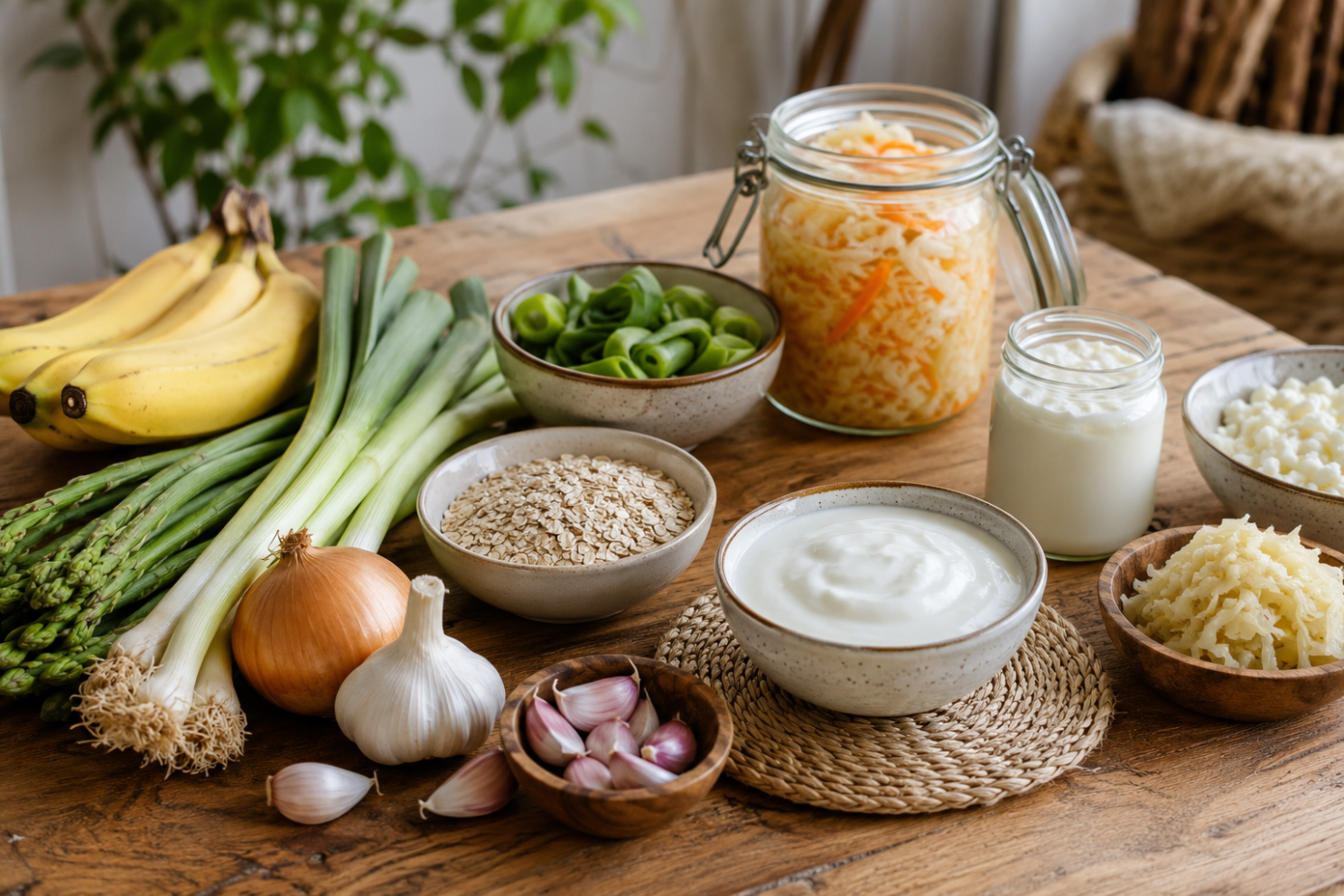
In studies conducted on the subject, particular attention is drawn to the mutual interaction of the intestinal flora with mental health. According to these new findings, it is not possible to change the intestinal flora or see its contribution to our mental health by only taking probiotic supplements from the outside. Research shows that an environment must also be prepared to nourish the microorganisms for them to hold onto the intestines. In other words, if we believe we will be treated by taking probiotics alone, we are wasting our money. We can see the positive contribution of probiotics to our mental health together with a balanced diet and regular exercise that will nourish our flora.
What are Psychobiotics?
Live bacteria that positively affect mental health are given a new name in scientific literature: Psychobiotic. Why was such a definition made? Because in recent studies, it was discovered that the “vagus nerve,” the longest and most complex nerve in our body, carries signals produced from the gut microbiome to the brain. Additionally, it was observed that some strains in the gut respond to cortisol and affect serotonin production. It was seen that serotonin produced in the gut regulates intestinal motility, stimulates the vagus nerve, and affects immune cells. In short, it was realized that psychobiotics could reduce stress-related body damage.
What should we expect?
In some studies, it was observed that young people given probiotic supplements over a 6-week period showed a meaningful improvement in their mental health compared to the group receiving a placebo and the control group. Moreover, this improvement continued in the period after the supplement was stopped, indicating a permanent change sign in the flora. These studies are very promising in terms of reducing the effects of stress and improving sleep quality.
However, food supplements should not be seen as a miracle. This is because these products are supplements that should be used as an "addition" to a healthy routine. That is, without eliminating the fundamental source of stress (for example, unemployment for the younger generation), it does not create a miraculous effect on mental health. Yet, stress-related diseases, anxiety, and problems like chronic sleep issues can be improved together with psychobiotics, healthy diet and regular exercise. For this reason, consumers have to understand their own needs by acting consciously.
Still, we must admit that all these developments are quite exciting. We will continue to share the latest developments in the food field. Don't forget to follow us!