


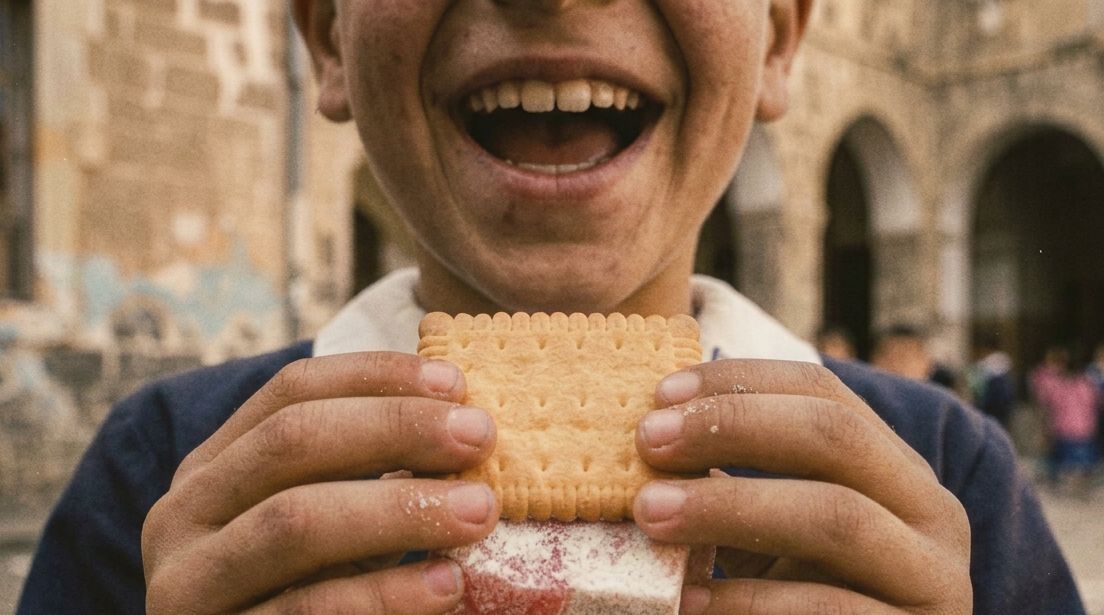
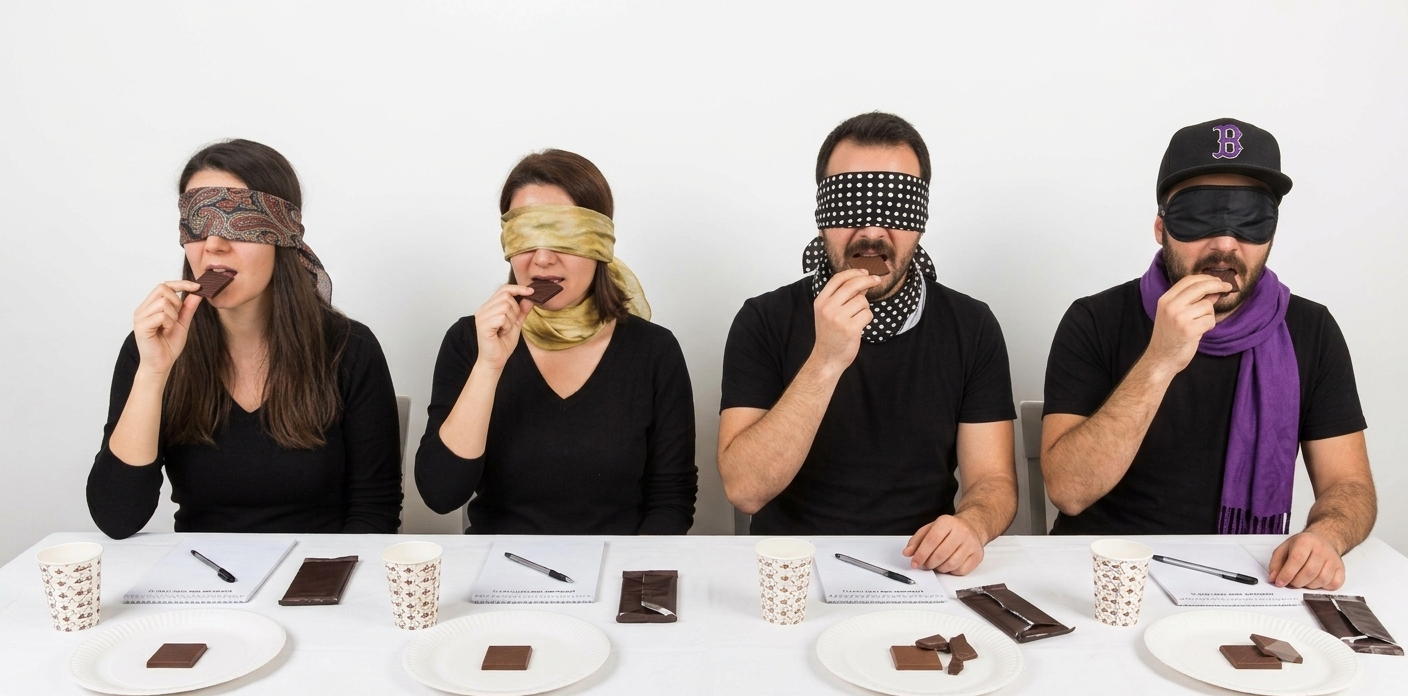
In the years I worked intensively in the snack food industry, some interesting patterns started catching my attention. Especially with snacks like wafers, crackers, or dark chocolate, some products were similar in taste and quality, yet when the brand changed, consumers sometimes stopped demanding them. I worked with competing companies, and I tasted both products whenever there was competition involved. Sometimes R&D teams would run blind tests, placing their own product side by side with the more preferred competitor's product, and the products were nearly identical. In fact, in these blind tests, consumers sometimes liked the less popular product more. But when they went to the store, they'd still choose the competitor's product anyway. The reason became a source of curiosity for me, but I couldn't fully understand the scientific background until I took a course on consumer behavior, psychology and marketing strategies.
To understand the issue better, I started looking into these competing brands' other products too. It turned out that emotional attachment having a positive effect on purchasing decisions didn't hold true across every product a brand made. For example: if a brand's wafer had been beloved, and a generation received that wafer as a reward from their teacher for answering a question correctly, then the packaging's unchanging color, font, or name made it easier to buy. If families of that era bought a certain brand's chocolate to "surprise" their kids, that child, once grown, could buy the same thing for their own children. Or if a brand was the first to release a spicy, pizza-like cracker and it became a hit, consumers kept believing the original was always the best even after similar products came out. In short, that specific product's meaning to the consumer was no longer just being a beloved taste — it had gained a new identity. Buying it became a vehicle that made nostalgia and a sense of belonging possible.
A similar situation can be recalled from the Coca-Cola and Pepsi example. Pepsi has long used an argument in its ads against Coca-Cola: when cola lovers are given a blind test — meaning the brands are removed and people are asked which one is better — many people prefer Pepsi without seeing the brand. But the same ad also acknowledges that when the brands are visible, Coca-Cola is preferred. So was this actually true?
A 2004 fMRI study by McClure and colleagues found that seeing the Coca-Cola brand did in fact activate brain regions associated with memory and cultural association (the hippocampus, the dorsolateral prefrontal cortex). When consumed without brand identification, people showed activation in the brain's reward region for both products; but when the brand name was revealed, they formed an additional memory- and culture-based connection with Coca-Cola. In other words, it was proven that forming an emotional bond has a neural counterpart.
So how does this bond get formed in the first place?
Being the first brand to enter a market, combined with competitors failing to offer an alternative quickly enough, often makes the product synonymous with the brand name itself : think of how 'Google' became a verb for searching anything online, or how 'Post-it' is used generically for sticky notes, even though it's actually a brand name. But another important factor here is what's called the "mere exposure effect". Coca-Cola today isn't just a brand we see at the supermarket. We see its logo, wording, and jingle almost everywhere, all the time — on the metro, on buses, on our car radio, on billboards along the road, on top of kiosk coolers, online, in TV series, in movies, at matches... in every part of our lives. It's so "familiar" that we feel a sense of trust when we see it. Anyone who doesn't like or consume Coca-Cola — myself included — will push back on that claim. But what's meant here is that our brain perceives what it sees as safe because of that feeling of familiarity. This is why a brand's visibility, and the frequency of that visibility, is such an important marketing strategy.

Coming back to nostalgia: as we noted in our previous blog post, eating for emotional reasons also comes into play here. Enjoying the eating experience, and eating sometimes for emotional, social, or other reasons, isn't a problem serious enough to require treatment — as long as it isn't excessive. But in these situations, consumers will choose whichever product they feel more familiarity with, meaning whichever one they have an emotional bond with.
On the other hand, memory reduces the emotional intensity of bad memories from the past while keeping that of good memories stronger. This "fast fading of bad memories" is called the "fading affect bias" in psychology. This phenomenon, related to the past and our memories, can also be discussed alongside another concept that helps explain the feeling of nostalgia: "rosy retrospection." This term describes our tendency to remember past events as better than they actually were, and to remember situations that are meaningful to us more positively because of the value we attribute to the event itself.
The term was first used by Mitchell and Thompson in 1994. In their study, participants rated "meaningful" life events — a trip to Europe, a Thanksgiving vacation, and a three-week bicycle tour — before, during, and after the events. The result was striking: people's expectations of an event, and their memory of it afterward, both turned out more positive than what they actually felt while living through the event itself. In other words, both the anticipation and the memory of an experience are brighter than the experience itself.

Much like the phrase often heard, 'the good old days' or 'old but gold,' it's a fact that when it comes to nostalgia, people always remember the past as better than it actually was. This has been known for a long time — even the Romans had a Latin phrase for it, "memoria praeteritorum bonorum," meaning "the past is always remembered well." For all these reasons, we often fall into the feeling that the past was better than the present, take a bittersweet pleasure in nostalgia, and gravitate toward products that evoke it.
In short, emotions, memories, and the many small details that remind us of them — along with nostalgia — matter a great deal in our purchasing decisions and in the taste of what we experience. That's why understanding the role nostalgia plays in our choices seems like an important subject for both consumers and producers alike.
What do you think? Is there any food you buy for nostalgia? You can write in the comments!
Important note: We have no partnership with any brand mentioned in this article, nor any intention to praise or criticize them. The examples given are also used in marketing strategy courses.