
”NO ADDED SUGAR” IS NOW ”SWEETENED WITH...”
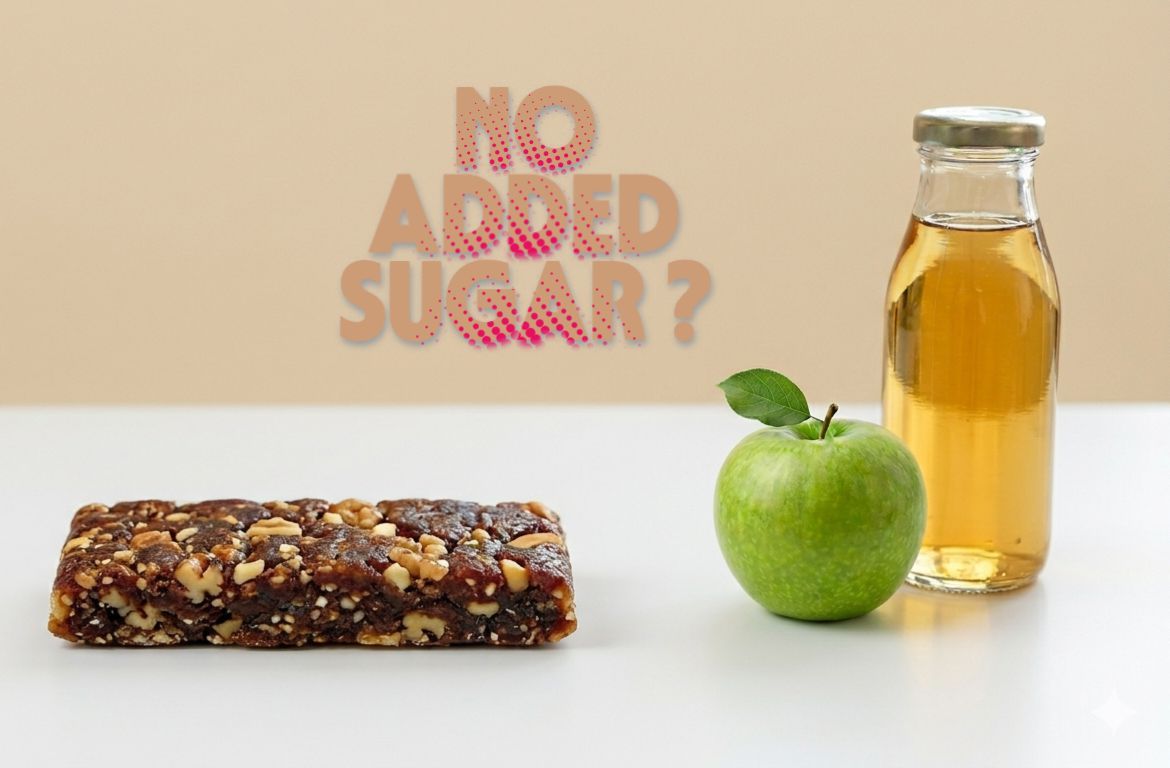
One topic that has long remained on the food industry's agenda is the "no added sugar" label. Yet sugar performs nearly indispensable functions in processed foods — significantly affecting water activity, viscosity, and the performance of other flavor-influencing ingredients. However, growing consumer awareness around sugar-free products, combined with health authorities drawing attention to the harms of sugar, appears to have set an irreversible sugar reduction process in motion. We now see sugar being reduced even in the snacks that make us feel the most "guilty." As a brief reminder, it is well established that the continuous consumption of sucrose — the table sugar we are all familiar with — can damage many organs including the brain, teeth, and skin, and may contribute to metabolic diseases. Dietitians and health authorities advise us to obtain sugar as "naturally" as possible and to limit table sugar to just 5 to 10 percent of our daily caloric intake. Yet we are equally reluctant to give up sweetness — because eating something sweet stimulates the brain's reward center and can sometimes transform a flavor entirely. The transformation of cacao into chocolate may be the most striking example of this effect.

On the other hand, the indispensability of sweet taste opens the door for both fruit sugar (fructose) and sweeteners in industrial food formulations. "Natural" ingredients such as dates, apple juice concentrate, and molasses are frequently used as "natural" sweeteners in place of added sugar. However, the claim "no added sugar" can be misleading for precisely this reason — because ingredients like apple juice concentrate and date paste, added to sweeten a product in place of sugar, are themselves components that should be consumed in moderation. For instance, the fruit sugar you consume from a fruit bar may deliver a higher sugar load than eating the fruit itself. Or, if you read the ingredient list of some packaged dried fruits carefully, you may notice that apple juice infusion has been applied. In that case, is the product you are consuming truly close to the fruit itself — or are you eating a sweetened product that contains no added sugar but still carries a significant fructose load?

Let us first look at how fructose — fruit sugar — is metabolized in the body. Fructose is a carbohydrate that, when consumed through whole fruit, enters the body alongside fiber. Unlike glucose, it is metabolized primarily in the liver. Studies show that when fructose is consumed through processed foods such as fruit juice — that is, without fiber — it can raise LDL cholesterol and contribute to insulin resistance. At the same time, when the fruit itself is consumed whole, it has been shown not to cause insulin resistance and may in fact be protective against type 2 diabetes.
So what happens when sweeteners are used?
Some research suggests that sweet taste — even at zero calories — may increase insulin secretion and glucose absorption in the intestine. This means that if you consume a beverage or food containing sweeteners without pairing it with fiber-rich foods, it may still increase intestinal glucose absorption and raise circulating insulin levels (hyperinsulinemia), potentially laying the groundwork for insulin resistance. Meanwhile, some animal studies suggest that continuous exposure to sweet taste may be habit-forming and could trigger the desire to consume more. While the same effect remains uncertain in humans, health authorities do not recommend the long-term use of sweeteners.
Finally, what has changed regarding the "no added sugar" claim?
Regarding the "no added sugar" claim, Europe, Japan, and Singapore had already introduced certain restrictions. Fruit concentrates used for sweetening purposes invalidated this claim. In Turkiye, the same rule was clarified through a guidance document published in August 2024: products using ingredients such as fruit concentrate, date syrup, or honey for sweetening purposes would no longer be permitted to carry a "no added sugar" claim. The most concrete example of this shift came from India. A brand labeling its date-sweetened chocolates as "no added sugar" was reported to the authorities by a competitor. The Indian Food Safety Authority issued a warning to the brand, and the packaging was updated to read "sweetened with dates." This case demonstrates that the trend toward accurate consumer information on sugar is global.
On the other hand, regulatory changes have been introduced in various countries, most notably within European food law, to prevent consumer deception and support sugar reduction. In fruit juice, European legislation already prohibited the addition of sugar. However, the voluntary use of the statement "contains only naturally occurring sugars" has now been permitted. Additionally, where sugar is reduced by a minimum of 30 percent through natural means — without the addition of sweeteners — the use of the label "reduced sugar" has been authorized. For jams and jellies, the minimum fruit content has been raised from 350 to 450 grams per kilogram. In these products, the critical variable is dry matter content, which has a considerable impact on consistency and viscosity. This new regulation may be aimed at increasing dry matter content through fruit rather than sugar.
The European Union announced the new regulation to member states in May 2024, with a deadline of June 14, 2026 for implementation.
Do you think this shift will push food producers to make changes in terms of taste — or will the search for new sweet formulations simply continue? We will see together.